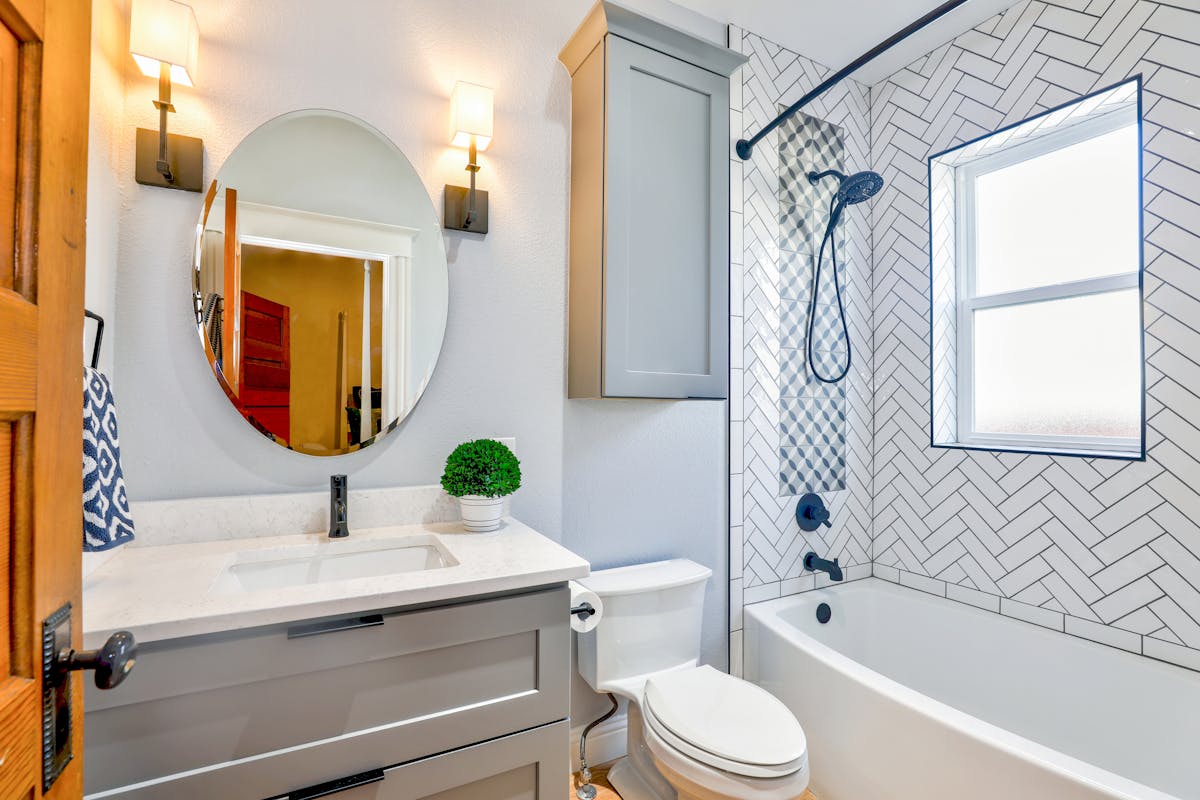
# Bathroom Layout Mistakes San Diego Homeowners Notice Too Late
Seed copy
A bathroom can look beautiful in photos and still feel wrong every morning. That is why layout matters more than trend lists. Homeowners usually regret the same categories of mistakes: not enough landing space, awkward door swings, poor vanity lighting, weak storage, shower dimensions that look fine on paper but feel cramped in real life, and materials that are hard to keep clean. The problem is rarely one dramatic choice. It is a stack of small planning misses that show up every day.
The best bathroom layouts start with movement, not finishes. How do you enter the room? Where do towels live? Can two people use the space without bumping into each other? Does the shower feel sheltered and easy to clean? Can the vanity support daily routines without crowding the counter? These are the questions that separate a pretty bathroom from a useful one.
In remodels, layout thinking also has to respect what the home already gives you. Existing window locations, plumbing runs, structural limits, and ceiling conditions all influence what can be changed gracefully and what should be improved more strategically. Strong contractors do not force the same template into every house. They look at the room, the homeowner’s habits, and the level of intervention that makes sense.
A helpful bathroom article should slow readers down before they lock in tile and fixtures. It should walk through clearances, storage logic, ventilation, lighting layers, waterproofing priorities, and daily-use details. Done well, that kind of post attracts better leads because it shows the company is thinking about how the room works, not just how it photographs.
Recommended structure
- Why layout mistakes matter more than trend mistakes
- Clearance problems that make bathrooms feel smaller than they are
- Vanity, storage, and lighting errors that create daily friction
- Shower planning mistakes: size, niches, glass, drainage, and cleaning reality
- Waterproofing and ventilation as non-negotiables
- How to think through the room before choosing finishes
CTA direction
Invite readers to book a bathroom planning conversation and review layout options.
Claude completion instructions
- Expand this seed into a polished homeowner-facing article.
- Keep the same topic, headline intent, and metadata unless you discover a clearly better version.
- Use only real internal links that exist on the Cali Dream site.
- Use the included local image file as the featured image.
- Add one useful pull-quote or highlighted takeaway only if it is original copy, not a fake testimonial.
- Do not invent review counts, awards, prices, or permit requirements.
- If you mention city-specific rules, verify them against official sources before publish.
- Remove any sentence that sounds templated, generic, or AI-fluffy.
- End with a direct service CTA pointing to Cali Dream, not financing content.
Ready to Start Your San Diego Remodel?
Get a free estimate from our licensed design-build team. CSLB #1054602.
Request Free Estimate(858) 434-7166