Renovating Multi-Unit Properties in San Diego: Duplex to Fourplex Upgrade Guide
You bought a duplex because the numbers made sense on paper, but now you're staring at peeling stucco, outdated kitchens, and a permit office that moves slower than a Sunday afternoon in Del Mar. If you're serious about a multi unit renovation san diego, you need to stop guessing and start planning like a contractor who's actually pulled permits at City Hall.
- Converting a duplex to a fourplex typically boosts monthly rental income by 40-60%, but it triggers strict fire separation, egress, and parking codes.
- Coastal properties automatically require California Coastal Commission review before any structural changes begin.
- Moisture barriers and proper flashing beat expensive finishes every time in our marine climate.
- Expect to spend $25K to $85K per kitchen and $12K to $50K per bathroom if you want tenants to actually sign leases.
- Title 24 energy upgrades are mandatory and will hold your final inspection hostage if ignored.
- Real project timelines run 6-9 months, not the 8-week flash promise you see on social media.
The Real Math Behind a Duplex Remodel
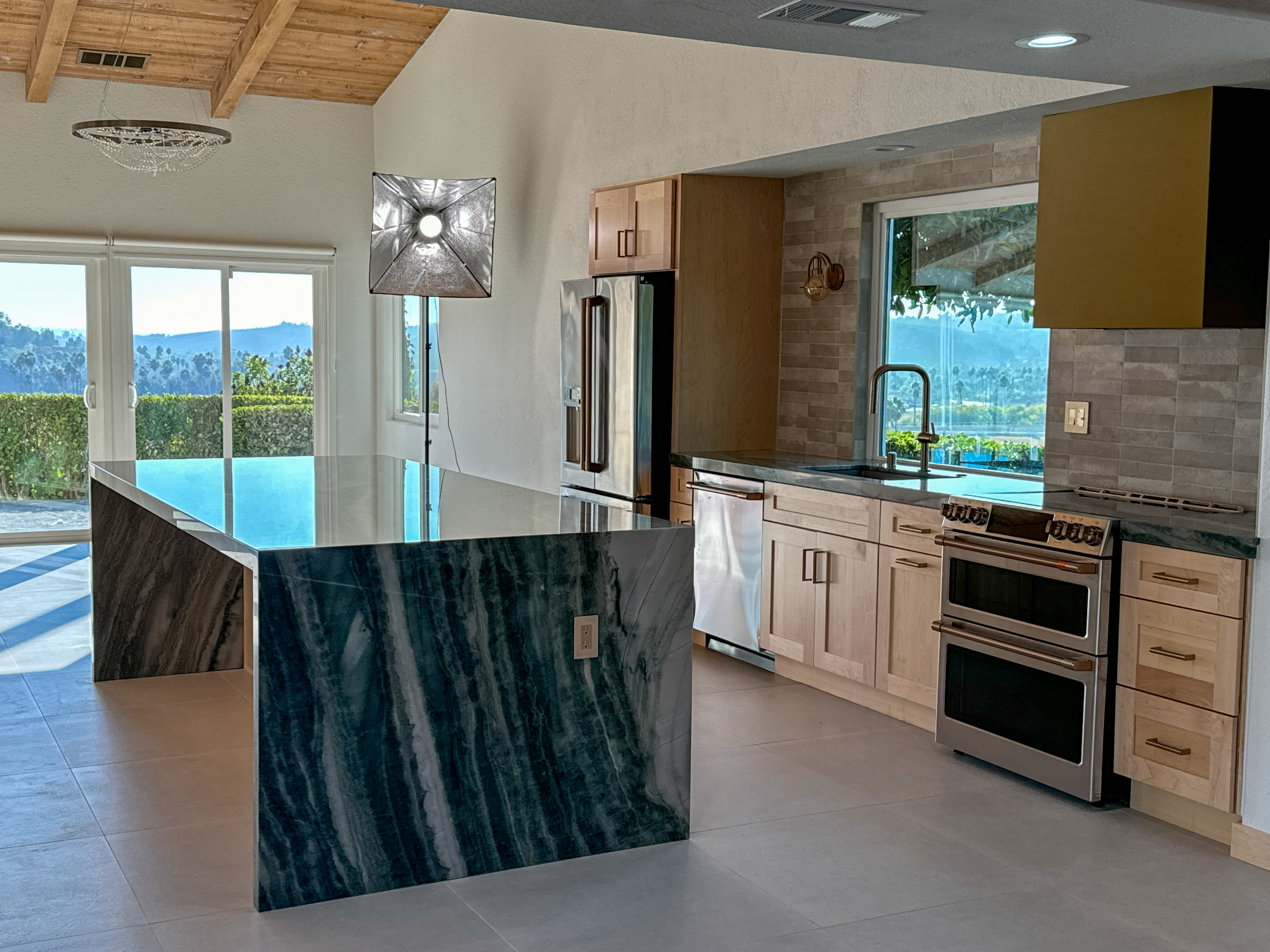
Most homeowners look at a duplex and see two separate homes. I look at it and see a single structural envelope fighting to support double the load, double the plumbing stacks, and double the electrical demand. San Diego's median home value sits around $925K right now, which means the barrier to entry for single-family homes keeps pushing investors toward multi-unit assets. But the math only works if you respect the code.
Adding two units isn't just knocking down a hallway wall. You're creating two new habitable spaces that must meet current fire-rated assembly requirements. That means 5/8-inch Type X drywall on both sides of shared walls, fire-stopped penetrations for plumbing and electrical, and independent egress windows that meet square-footage requirements. I always tell my clients that the money isn't made when you pour the concrete—it's made when you avoid the things that kill margins. We've learned the hard way that cutting corners on load-bearing walls or ignoring fire-rated drywall saves you nothing but guarantees a failed inspection and a contractor who won't touch the job.
On a duplex remodel we started in North Park last year, the original owner wanted to keep the existing stairwell and just split the floor plan. I walked the site, measured the headroom, checked the structural beams, and told him straight up: it's not legal. We had to reconfigure the entry, add a second exterior stair, and reinforce the floor diaphragm. The budget jumped, but the appraisal came in 18% higher because the units were fully compliant. If you want the actual numbers on what drives value in this market, check out our breakdown on home renovation ROI in San Diego: Maximizing Your Investment.
The Real Timeline vs. The Marketing Promise
Download our Free Project Planning Checklist
Get our step-by-step planning guide — the same one we give clients before every project. No spam, just the checklist.
Get the Free ChecklistEvery contractor has a sales pitch, but timelines are where the truth usually shows up. You're looking at a minimum of 6 to 9 months from demolition to final inspection. That includes 60 to 120 days just sitting in queue at the San Diego Development Services Department for plan review, plus whatever time the utility companies take to install separate meters. Coastal Commission review adds another 3 to 6 months if your property falls within the 300-foot coastal zone.
Here's what most contractors won't tell you: the schedule breaks down in the rough-in phase. You'll pull the framing inspection, then the plumbing inspector will show up and notice you didn't chase the pipes through the fire-rated wall correctly. You'll pull the electrical inspection, only to find the grounding electrode system doesn't meet current code. I always tell my clients to build in a 4-week buffer for inspections. When you're working with multiple trades, one delayed material shipment or a permit hold on a seismic retrofit detail can stall the entire crew. We've learned the hard way that rushing the envelope to beat the rainy season guarantees a moisture failure down the line.
Coastal vs. inland work also changes the pace. In Del Mar or Pacific Beach, salt air accelerates fastener corrosion, so you're specifying stainless steel or coated fasteners, which often have longer lead times. Inland neighborhoods like Mira Mesa or Kearny Mesa move faster on exterior work but still demand strict Title 24 compliance. I'll show you exactly where the budget bleeds in the next section.
Cost Breakdown for a Multi Unit Renovation San Diego

Multi-unit work multiplies your line items. You're not just renovating once; you're building two additional living spaces inside an existing footprint. Below is a realistic 2026 cost breakdown for a standard duplex-to-fourplex conversion in San Diego. These are hard costs for a mid-range finish that actually holds up to tenant turnover.
| Item | Low End | High End | Notes |
|---|---|---|---|
| Demolition & Haul | $8,000 | $15,000 | Includes asbestos/lead abatement if pre-1978 |
| Fire-Rated Walls & Drywall | $12,000 | $22,000 | 5/8" Type X, fire-stopping, acoustical insulation |
| Plumbing Rough & Fixtures | $18,000 | $35,000 | New stacks, water heaters, tenant-grade fixtures |
| Electrical & Separate Metering | $15,000 | $28,000 | SDG&E upgrade, 200A panels, submeters |
| Kitchen Remodel (per unit) | $25,000 | $85,000+ | Mid-range averages $45K; includes cabinets/appliances |
| Bathroom Remodel (per unit) | $12,000 | $50,000+ | Waterproofing, tile, vanity, shower systems |
| Flooring (per unit) | $3,500 | $8,000 | LVP $5-$10/sqft installed; Hardwood $8-$15/sqft |
| Countertops (per unit) | $2,500 | $6,000 | Quartz $50-$120/sqft; Granite $40-$100/sqft |
| Windows & Egress | $8,000 | $18,000 | Must meet SD building code for emergency exit |
| Permits & Fees | $2,000 | $8,000 | Minor $200-$500; Major structural/coastal $2K-$8K |
| Title 24 Upgrades | $4,000 | $12,000 | Insulation, low-E glass, efficient HVAC controls |
| Contingency (15%) | $18,000 | $35,000 | Non-negotiable for older SD stock |
That table doesn't include your architectural fees, structural engineering stamps, or landscape/parking reconfiguration costs. For a quick baseline before you commit, plug your square footage into our free cost calculators to see how material markups shift when you're buying in bulk for four units. I always tell my clients to budget for the worst-case scenario and hope for the best. When you're managing four separate utility accounts and fire partitions, the unexpected always finds you.
Del Mar Spotlight: Beachfront Premium and What It Means for Your Budget
Del Mar sits in a unique tier. You're working with homes built from the 1970s through the 2000s, often on steep slopes with panoramic ocean views. The average remodel in this pocket runs $100K to $300K per unit, but the premium tenants expect is real. They don't want builder-grade laminate; they want stone, soft-close hardware, and finishes that justify $4,500 to $6,500 monthly rents. That said, the coastal environment punishes shortcuts.
The moisture barrier is everything in Del Mar. One missed flashing detail behind a window or at a balcony parapet and you're looking at mold in 18 months. The marine layer drops heavy humidity every morning, and salt air eats standard drywall tape and cheap fasteners. We always specify stainless steel screws, silicone-sealed joints, and a continuous WRB (weather-resistive barrier) with properly integrated drain flashings. I always tell my clients that a $2,000 envelope upgrade saves a $40,000 tear-out later.
Permitting here also triggers automatic California Coastal Commission review for any major structural work, grading, or exterior changes. The Coastal Commission doesn't care about your interior finishes; they care about sightlines, drainage, and how your project affects the public trust. If you're pushing walls out or adding decks, you'll need a coastal development permit before your building permit even gets stamped. For a closer look at how coastal moisture and high-end finishes intersect, check out our guide on luxury bathroom renovation in La Jolla: why Cali Dream is the best choice. The waterproofing principles are identical, just applied to a different price tier.
What Other Contractors Won't Tell You

Here's what most contractors won't tell you: hidden costs aren't bugs in multi-unit projects; they're the feature. You'll hit them every time if you don't plan for them.
First, utility upgrade fees. SDG&E and City Water will charge you to bring in separate meters, upgrade the main service entrance, and install submeters for water and gas. That's easily $8,000 to $15,000 sitting outside your contractor's quote. Second, parking reconfiguration. San Diego code usually demands 1.5 to 2 spaces per unit. If your existing driveway only fits three cars, you'll need to pave a fourth, pour a new pad, or apply for a variance that takes months. Third, seismic retrofit requirements. Most 1970s to 2000s duplexes in SD lack proper hold-downs and shear walls. Adding units forces you to meet current seismic standards, which often means bolting the sill plate, adding plywood shear panels, and reinforcing the foundation. Fourth, HOA and CC&R restrictions. If your property sits in a managed community, you might be legally blocked from increasing the unit count entirely. Always pull the CC&Rs before you sign a contractor.
And here's the uncomfortable truth: sometimes you shouldn't do this project at all. If the structure is compromised, the zoning doesn't allow four units, or the rent cap in your area won't cover the debt service, you're pouring money into a liability. I've walked away from jobs because the numbers only worked if interest rates stayed at zero. They won't.
Mistakes I See All the Time on Investment Property Renovation Jobs
On a kitchen we did in Del Mar last month, the previous owner had tried to DIY the plumbing chases. The result? Water damage behind the new drywall within six months. Here are the exact mistakes I see killing multi-unit margins:
- Skipping the moisture barrier and flashings. You can install $120/sqft quartz countertops, but if water gets behind the wall, it doesn't matter. I always specify a continuous WRB, integrated pan flashings at every window, and proper drip edges.
- Using non-fire-rated partitions between units. Standard 1/2-inch drywall is a matchstick. Fire-rated assemblies require 5/8-inch Type X, sealed joints, and fire-stopped penetrations. One inspection miss and you're tearing out finished walls.
- Underestimating parking ratios. SD code is strict. If you're adding two units, you need the spaces to match. Failing to plan this early means expensive concrete pours or denied permits later.
- Choosing cheap fixtures that break in two years. Tenants abuse hardware. I always specify commercial-grade hinges, reinforced cabinet boxes, and pressure-rated toilets. The upfront cost is higher, but the callback cost is zero.
- Not planning separate HVAC zones. One system for four units is a disaster waiting to happen. You need independent thermostats, separate condensers, and properly sized ductwork. Title 24 will also flag you if the load calculation doesn't match the equipment.
We've learned the hard way that planning the envelope and the mechanicals first saves you from ripping out finished work. I always tell my clients to get the geotechnical report early. Soil conditions in SD vary wildly from bluff edges to flat inland lots, and foundation work dictates everything else.
Pro Tips from 200+ Projects
After pulling permits, fighting inspections, and managing crews across 200+ remodels, here's what actually moves the needle on multi-unit jobs:
- Run conduit now for future smart locks and utility meters. Pulling wire after drywall is done costs triple. Leave a 1-inch conduit from the entry to the panel for future upgrades.
- Use LVP over hardwood in rentals unless you're in Del Mar. Hardwood scratches, gaps, and warps with SD's humidity swings. LVP holds up to tenant turnover and costs half the material price.
- Get the utility company upgrade timeline before you break ground. SDG&E and City Water often have 8-12 week lead times for meter installations. Your schedule depends on them, not your drywall crew.
- Phase the work to keep some units rentable. If you finish one half first, you can cover carrying costs while the other half gets built. Just make sure you seal the work zone properly to keep dust and noise out.
- Document everything with timestamped photos. When the inspector asks why a pipe chase isn't fire-stopped, you need proof of what was behind the wall before drywall went up. It saves you from tear-outs.
FAQ
Q: Can I legally convert my duplex to a fourplex in San Diego?
Yes, but only if your zoning allows it and your lot meets current code. You'll need to verify your property's zoning designation with the San Diego Development Services Department, confirm that the lot size supports the required parking ratio (usually 1.5 to 2 spaces per unit), and ensure the structural frame can handle the additional load. The conversion must also meet fire-rated wall assemblies, independent egress windows, and separate utility metering. If your property sits within 300 feet of the shoreline, you'll also need a California Coastal Commission permit before any structural work begins. I always pull the zoning report and CC&Rs before we draw a single line.
Q: How much does it actually cost to add two new units?
For a standard duplex-to-fourplex conversion in San Diego, you're looking at $120,000 to $250,000 in hard costs per unit, depending on finishes and site conditions. Kitchens run $25K to $85K+, bathrooms $12K to $50K+, and quartz countertops land between $50 and $120 per square foot installed. Granite sits at $40 to $100 per square foot. Flooring runs $8 to $15 per square foot for hardwood or $5 to $10 for LVP. Permits for major structural work typically cost $2K to $8K, while minor interior permits sit at $200 to $500. Title 24 upgrades, seismic retrofits, and separate utility meters add another $10K to $20K to the baseline. I always recommend a 15% contingency because older SD stock always hides something.
Q: Do I need California Coastal Commission approval?
If your property falls within the 300-foot coastal zone, yes. The Coastal Commission reviews any grading, structural changes, exterior modifications, or visible impacts to public sightlines. They don't care about your interior cabinets; they care about drainage, erosion control, and how your project affects the coastal environment. The review process adds 3 to 6 months to your timeline and requires a separate set of plans. Inland neighborhoods like Mira Mesa, Kearny Mesa, or Rancho Bernardo generally skip this step entirely, which is why many investors target those pockets for faster permitting. I always check the coastal commission boundary map before we pull a single permit.
Q: What's the fastest way to get permits through the Development Services Department?
Speed comes down to plan quality and pre-submission meetings. You need stamped structural drawings, a complete Title 24 energy report, fire-rated wall details, and a clear parking layout before you submit. I always schedule a pre-submission meeting with the plan checker to review the scope upfront. That catches zoning conflicts, seismic retrofit requirements, and utility conflicts before the official queue. Minor permits can clear in 4 to 8 weeks; major structural or coastal permits take 3 to 6 months. Rushing incomplete plans guarantees multiple review cycles, which actually slows you down. Patience and precision beat speed every time.
Q: Should I do the work myself or hire a licensed contractor?
Multi-unit conversions involve fire codes, seismic standards, electrical metering, and plumbing stack reconfiguration that require licensed trades and municipal inspections. DIY work on load-bearing walls or fire-rated assemblies will fail inspection and force you to tear out finished work. Even if you handle cosmetic finishes, the rough-in phase demands licensed electricians and plumbers who can pull their own permits. I always tell my clients that the license isn't a formality; it's your insurance against code violations, failed inspections, and voided insurance claims. If you want the actual numbers on what drives value in this market, check out our breakdown on home renovation ROI in San Diego: Maximizing Your Investment.
You're sitting on a property that can pay for itself if you respect the code, budget for the envelope, and hire people who actually pull permits instead of promising shortcuts. I've spent years fixing contractor mistakes that cost owners six figures in delays and tear-outs. If you want a duplex remodel that passes inspection on the first try and actually rents at market rate, let's look at the plans together. Call or text (858) 434-7166 to book a site walk. Cali Dream Construction | CSLB #1054602 | San Diego, CA
Ready to Start Your Project?
I'm Fares Azani, and my team at Cali Dream Construction has completed 200+ remodels across San Diego. We'd love to help with yours.
Or request a free estimate online | License CSLB #1054602